

Introduction
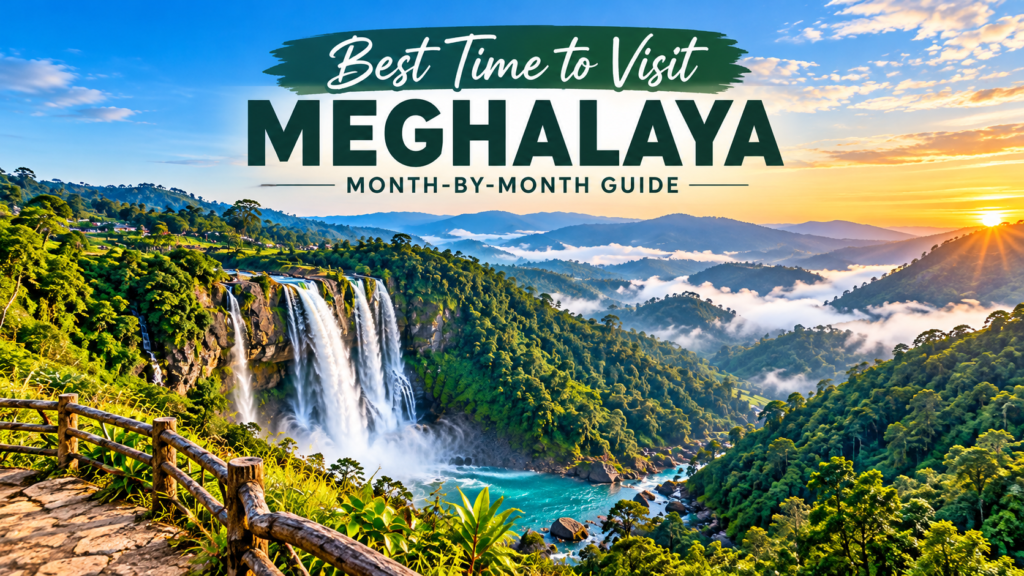
Meghalaya is a destination where the landscape changes dramatically with the seasons. One month, you might find yourself looking across clear blue skies from a hilltop; another month, you could be watching powerful waterfalls plunge through mist-covered cliffs. From the lively streets of Shillong to the dramatic landscapes of Cherrapunji, every season offers a different reason to visit.
But when is the best time to visit Meghalaya?
For most travellers, October to April is an excellent period for sightseeing, road trips, trekking and exploring the state’s natural attractions. October and November offer a particularly appealing balance of greenery and improving weather, while winter and early spring are popular for outdoor activities. If you want to experience Meghalaya’s spectacular monsoon waterfalls, June to September can also be rewarding, provided you plan carefully for heavy rain.
Meghalaya Tourism describes spring, monsoon, post-monsoon and winter as distinct travel seasons, each with its own attractions and considerations.
In this guide, Walk Less Travel explains what each month offers so you can choose the right time for your trip.
Which is the best month to visit Meghalaya?
The best month depends on your travel priorities.
- October and November: Great for a first visit, with improving weather, green landscapes and opportunities for sightseeing.
- December to February: Ideal for cooler weather, clearer views and many outdoor excursions.
- March and April: Good for comfortable sightseeing, spring landscapes and exploring at a relaxed pace.
- May to September: Best suited to travellers who want lush scenery and powerful waterfalls, but rain can disrupt plans.
There is no single perfect month for everyone. The best choice depends on whether you prefer clear skies, flowing waterfalls, outdoor adventures or a quieter holiday.
Meghalaya weather month by month
Seasonal conditions are typical patterns, not a forecast. Weather can vary considerably between Shillong, Sohra, Dawki and other parts of Meghalaya.
January – Cool weather and clear views
January is a good choice for travellers who enjoy cool mornings, comfortable daytime sightseeing and outdoor excursions. Shillong can feel quite cold early in the morning and after sunset, so carry warm clothing.
This month is suitable for exploring Shillong, visiting viewpoints and planning road trips when conditions are favourable. If you want to visit Dawki, check local river conditions rather than assuming the water will always be clear.
Best for: Sightseeing, winter holidays and photography.
February – A good month for outdoor adventures
February generally brings relatively dry conditions, making it attractive for visitors interested in nature trails, cave exploration and trekking. It can also be a good time to visit the living root bridges around Nongriat, although the trek involves many steps and requires reasonable fitness.
Pack a light jacket for chilly mornings and evenings, and allow enough time for longer excursions.
Best for: Trekking, cave visits, sightseeing and outdoor activities.
March – Pleasant weather and quieter exploration
March marks the beginning of spring. The weather is often comfortable for exploring Shillong and nearby destinations, while the hills begin transitioning towards their greener pre-monsoon appearance.
It is a useful month for travellers who want to explore several destinations without planning every day around heavy monsoon rainfall. However, showers can occur, so keep a rain jacket handy.
Best for: Road trips, family holidays and multi-day itineraries.
April – Spring landscapes and cultural experiences
April is another attractive month for exploring Meghalaya. Days are generally mild, and Shillong makes a pleasant base for discovering nearby viewpoints, markets and natural attractions.
Travellers may also have opportunities to experience traditional Khasi cultural celebrations, depending on the festival calendar. Afternoon showers and thunderstorms can occur, so outdoor plans should remain flexible.
Best for: Spring sightseeing, cultural experiences and nature trips.
May – Green hills and the beginning of heavier rain
May is a transition month as the monsoon approaches. The landscape becomes greener, and waterfalls may begin gaining volume, particularly later in the month.
Rainfall can increase considerably, especially in the southern Khasi Hills. If you travel during May, plan a mixture of indoor and outdoor activities and avoid scheduling every attraction tightly.
Best for: Green landscapes, flexible itineraries and travellers comfortable with occasional rain.
June – The monsoon transforms Meghalaya
June brings the monsoon into full swing across much of the region. Around Sohra and Mawsynram, rainfall can be particularly intense, creating spectacular waterfalls and dramatic cloud-covered scenery.
However, heavy rain can reduce visibility, make walking trails slippery and cause travel delays. Some outdoor activities may be restricted or suspended when conditions become unsafe.
Best for: Waterfall photography and monsoon scenery, provided you accept weather-related uncertainty.
July – Spectacular waterfalls and dramatic landscapes
July is part of Meghalaya’s main monsoon period. Waterfalls can be extremely impressive, and the hills appear lush and vibrant.
This is not necessarily the easiest month for a first-time visitor with a packed itinerary. Rain can interfere with viewpoints, river activities, treks and road journeys. Check local advisories before travelling and never approach flooded rivers or waterfall edges.
Best for: Monsoon landscapes and waterfall enthusiasts.
August – Lush scenery and powerful waterfalls
August continues the wet season, with green valleys, mist-covered hills and strong waterfalls in many areas. Photographers may appreciate the atmosphere, but persistent rain can make some outdoor plans difficult.
Wear footwear with good grip, carry waterproof bags and keep spare time in your schedule. Avoid trekking during heavy rainfall or when local authorities advise against it.
Best for: Nature photography and travellers who enjoy rainy weather.
September – Green landscapes as the monsoon begins to ease
September can be an appealing transition month, although substantial rainfall may continue. The countryside remains green, and waterfalls can still be impressive.
Conditions are not guaranteed to improve uniformly throughout the state. Before travelling, check weather warnings and road conditions, particularly if your itinerary includes Sohra, Dawki or remote areas.
Best for: Green landscapes, waterfall viewing and flexible road trips.
October – A strong all-round choice
October is often one of the most appealing months for a Meghalaya holiday. As the monsoon retreats, conditions may become more favourable for sightseeing, and the landscape retains much of its seasonal greenery.
It is a good time to plan a trip combining Shillong, Cherrapunji, Mawlynnong and Dawki. Early October can still bring rain, so check the forecast before finalising outdoor activities.
Best for: First-time visitors, sightseeing and multi-destination holidays.
November – Comfortable sightseeing and autumn scenery
November is another excellent option for travellers seeking a balance between sightseeing and outdoor exploration. The weather is generally drier than during the monsoon, although local conditions can vary.
You can plan visits to waterfalls, viewpoints, villages and natural attractions with greater flexibility than during the wettest months. Shillong may also host seasonal cultural events, depending on the annual calendar.
Best for: Couples, families, photography and road trips.
December – Winter holidays in Shillong and beyond
December is popular for winter travel, festive celebrations and family holidays. Shillong has a lively atmosphere around Christmas and New Year, while the surrounding hills offer opportunities for scenic drives and outdoor excursions.
Expect chilly mornings and evenings, and book accommodation and transport ahead of peak holiday dates. Fog or unexpected showers can still affect travel.
Best for: Christmas holidays, winter sightseeing and family trips.
The seasonal recommendations above reflect the broad climate patterns described by Meghalaya Tourism and the Government of Meghalaya.
Best time to visit Meghalaya for different experiences
| Travel experience | Recommended period |
|---|---|
| First trip to Meghalaya | October–November |
| Sightseeing in Shillong | October–April |
| Waterfalls at their strongest | June–September, weather permitting |
| Dawki river activities | Generally drier months, subject to local conditions |
| Living root bridge trekking | Often October–April, depending on trail conditions |
| Family road trips | October–April |
| Cooler winter holidays | December–February |
| Green landscapes and monsoon photography | June–September |
These are general planning recommendations, not guarantees. Always verify local weather, attraction access and activity availability before departure.
Essential travel tips for planning your Meghalaya trip
Choosing the best season is only one part of planning a successful holiday. A few practical decisions can make your journey more comfortable.
- Plan your route: Shillong, Sohra (Cherrapunji), Dawki and Mawlynnong are popular destinations, but travelling between them takes time. Avoid squeezing too many stops into one day.
- Book transport early: During peak holiday periods, arrange your car rental and accommodation in advance.
- Pack for changing weather: Carry a light jacket even in warmer months. During the monsoon, take waterproof clothing, a rain cover for your bags and shoes with good grip.
- Check local conditions: Heavy rainfall can affect roads, viewpoints, treks and river activities. Follow local safety instructions.
- Allow extra travel time: Mountain roads, traffic and weather can make journeys longer than expected.
- Respect local communities: Follow local guidance at villages, sacred groves, cultural sites and natural attractions.
For official seasonal guidance, consult Meghalaya Tourism.
Frequently asked questions
1. What is the best time to visit Meghalaya?
October to April is generally a good period for sightseeing and outdoor activities. October and November are particularly attractive for many first-time visitors, while the monsoon months are better suited to those specifically seeking dramatic waterfalls and rainy landscapes.
2. Which month is best for a Meghalaya trip with family?
October, November, March and April are useful options for family holidays because they often offer favourable conditions for sightseeing. Choose your dates according to the activities planned and the needs of children or older travellers.
3. Is Meghalaya worth visiting during the monsoon?
Yes. The monsoon creates spectacular waterfalls and lush landscapes. However, heavy rain, slippery trails, reduced visibility and possible road disruptions require additional precautions and a flexible itinerary.
4. What is the best time to visit Shillong?
October to April is generally suitable for exploring Shillong, visiting local attractions and taking nearby road trips. December and January are cooler, so bring warm clothing.
5. When should I visit Cherrapunji for waterfalls?
June to September often brings the strongest waterfall flows. October can also be attractive because the landscape may remain green while conditions gradually improve. Visibility and access depend on the weather.
6. How many days are enough for Meghalaya?
Five to seven days is a useful starting point for a trip covering Shillong, Sohra, Dawki and nearby attractions. A shorter holiday can focus on fewer destinations, while a longer trip allows more time for trekking, villages and less-visited areas.
7. Should I rent a car for a Meghalaya trip?
A private car can offer flexibility when travelling between destinations, particularly for families and groups. Compare the vehicle, route, total fare, driver arrangements and any additional charges before booking.
Plan your Meghalaya holiday with Walk Less Travel
Meghalaya offers something different in every season, from cool winter mornings and springtime road trips to monsoon waterfalls and mist-covered hills. The right travel dates depend on the experiences you want most.
If you are planning a trip from Guwahati, Walk Less Travel can help you explore suitable transport options for your itinerary. Whether you are travelling with family, planning a couple’s holiday or organising a group road trip, arranging your route and transport in advance can make the journey easier.
Ready to explore Meghalaya? Visit Walk Less Travel to explore travel services and enquire about planning your next trip.




One Response